When I started Will Be Live, we were evangelizing the mission of making sure B2B stops interrupting audience members. With stats showing that the first 70% of the buying journey is anonymous and 95% of buyers are out of market when they see content from you, the natural progression was to help our clients with brand strategy and demand creation tactics.
Most B2B companies that have survived the pressures of the pandemic have come out the other side and realized that buyers are not responding to their unhealthy obsession with bottom of the funnel demand generation tactics. Marketers know the model is broken but they don't know what to build in its place. Something tells me my last blog did a decent job highlighting my frustrations.
In the second half of 2025, we started to see clear signals that this shift was coming into effect. Marketing budgets were being restructured and internal teams were going through reorgs. Organizations were starting to notice that they weren't broken, just misaligned and an unlikely world is showing us the fix: Venture Capital.
With AI tapping into nuances that mirrors identity, preferences, and purpose, I see a moat emerging that is making me more excited and nervous than ever before. Excited because there are organizations making strides in building for the long term success that transcends any quarterly earnings report and nervous for those that don't see the cracks in the foundation they’re standing on.
Brand and Demand
One of the most persistent themes we picked up on in the modern B2B arena of growth over the last 2 years was the divisions of two critical disciplines: Brand and Demand.
Brand
Your brand isn't what you say it is, it's what the market believes it to be.
Branding ≄ Content
It lives in the minds of your buyers, shaped by every signal, story and touchpoint you put into the world. That’s why intentional focus on positioning, messaging, audience segmentation, market insight, and even executive thought leadership isn’t optional, it’s foundational.
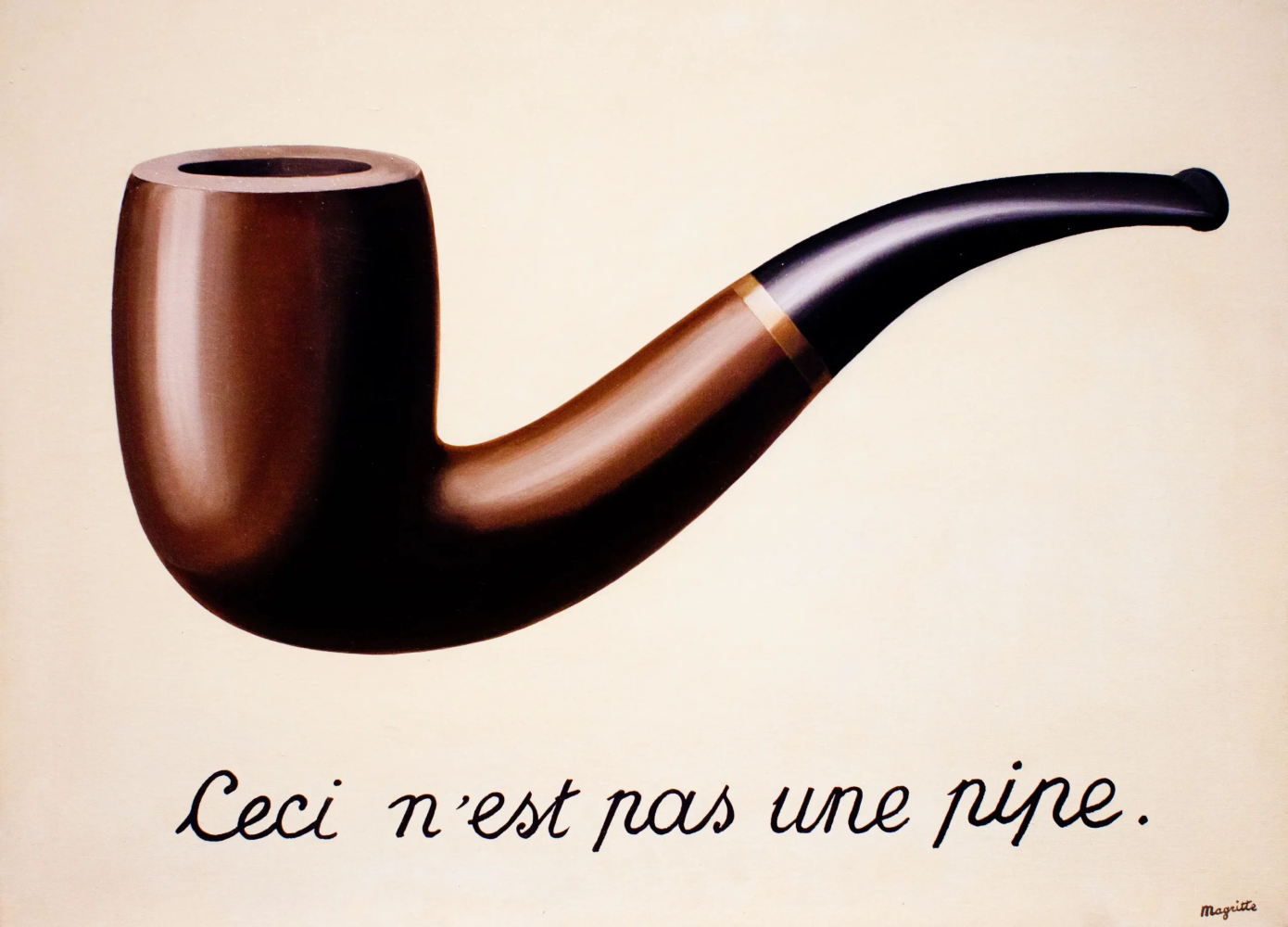
When these layers of understanding aren't built early, it's felt most by your audience and the result oftentimes is silence. Even more challenging is that in B2B especially, the majority of audience members are silent. Most of your buyers won’t comment, like, or engage but they are watching, listening, and evaluating you from a distance. Every signal you send is either building relevance or confirming irrelevance. Even then, the foundation needs to be met with a level of testing to confirm assumptions, understand the nuances of each audience, industry and channel; and help you predict what your audience may be projecting onto your brand based on the personal context it exists within.
Demand
The brands that win aren't the ones that are just "known", they are the ones that people think of in a buying situation.
Demand ≄ Discoverability
For all the sales professionals, I liken this to neither Hunter nor Farmer tactics (for those without a sales background: either go after new customers or grow the ones you’ve got). Winning brands employ a tactic that I like to call the Squirrel method. Planting valuable acorns of information in their mind to build brand affinity and letting go of the notion that this type of behaviour can't be tracked, is essential. Just because your audience sees a piece of your content or finds you through an LLM doesn't mean they're any closer to buying, but it can be the start of a relationship that will eventually make them more effective in their role. I think of Scrat in the movie Ice Age - he isn't just chasing acorns, he's unknowingly planting forests - assuming that the acorn he keeps chasing isn't the same one!

“Squirrels have been criticized for hiding nuts in various places for future use and then forgetting the places. Well, squirrels do not bother with minor details like that. They have other things on their mind, such as hiding more nuts where they can’t find them.” - W. Cuppy
B2B has always obsessed over proving ROI of content campaigns yet they often ignore the fact that today's buyers prefer to self-educate long before engaging with sales. When generating demand, we often frame it as 10-15 different passive and active acorns that need to be planted before your buyer associates you with the problem you solve.
Generating demand is just one layer, not the whole system. We need to capture that demand and convert interested buyers into advocates. Sales, marketing and ops all play a part given the 5-10 decision makers that are part of a mid-market or enterprise sales effort and that's why initiatives like power mapping are still so critical.
Over the last year though, both brand and demand seem to be converging—particularly in tech. I'm seeing more “growth”-centric hybrid roles emerging, and more importantly, we're seeing finance leaders pay close attention to GTM motions that encompass both disciplines and tools that are looking to quantify this effort.
Today we'll break down this phenomenon in more detail and examine an unlikely world: Venture Capital.
Some of the largest firms are planting for decades to come. Whether these firms realize why it matters for B2B, I believe, is a conversation worth having.
Consider one of the most insular and traditionally impenetrable industries.
Historically venture capital was driven by insider access, pedigree and capital. Now, the very definition of "smart money" is evolving. It's no longer just about funding, it's about distribution, credibility, resonance and strategic amplification.
Then: Access to capital was largely determined by your proximity to powerful people: Stanford connections, Sovereign Wealth Funds, Sand Hill Road lunches, intros from other VCs, conversations held in members-only private clubs.
Now: The best aren't just capital allocators, they're media engines, brand builders and narrative shapers where the advantage is built through embedded distribution not emerging tech.
As geopolitical shifts reshape capital flows, venture is extending their presence beyond deal rooms, building media engines that evangelize their mission globally. The VCs who win are not chasing founders; founders already know them, trust them, and want them in the room.
Here's a breakdown of some of the most ambitious new age VC's that are helping to redefine the landscape through media.
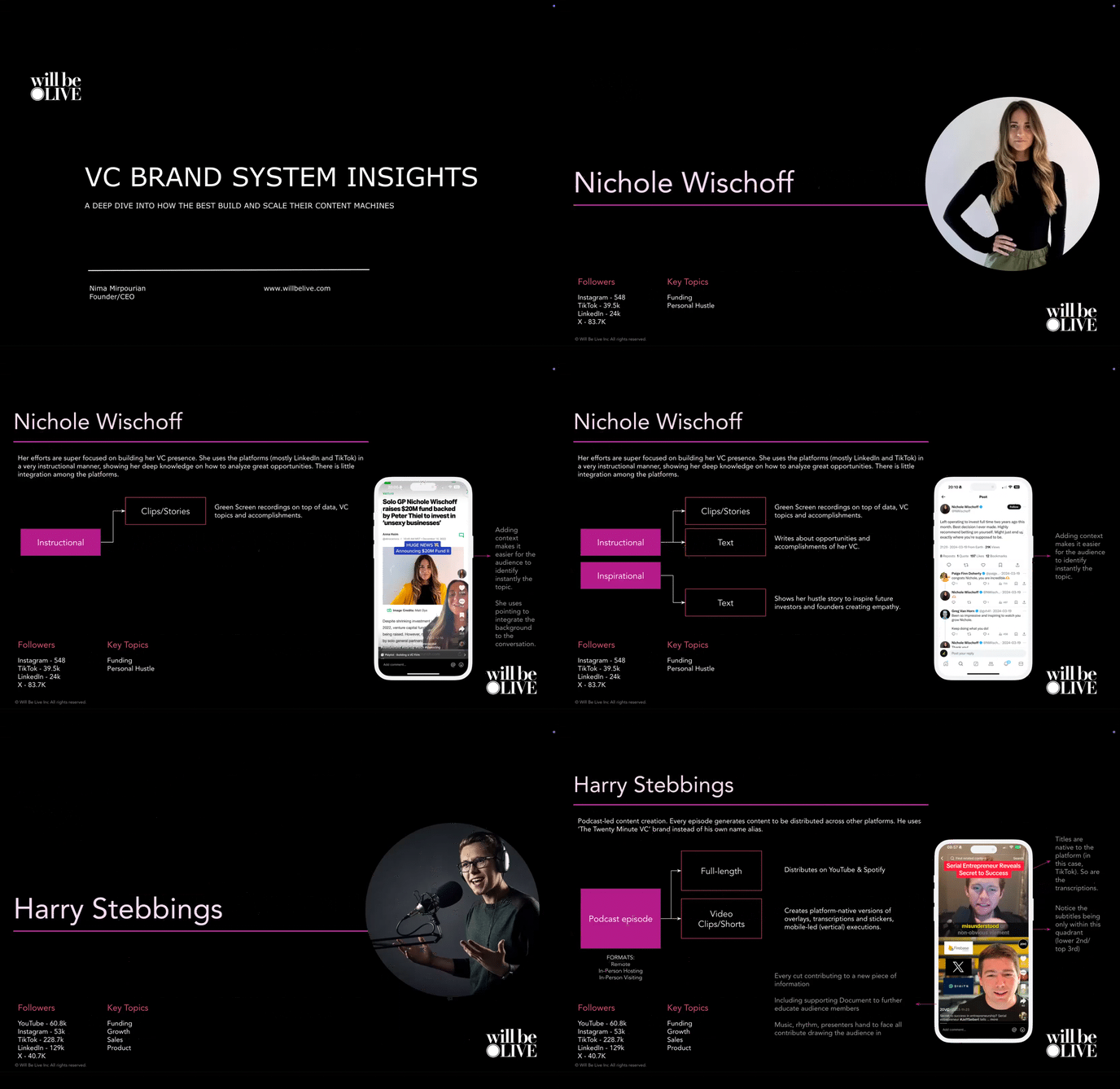
We’ve even gone as far as to put our video editors through an extensive working interview based on the ways in which Harry Stebbing's 20VC media team have leaned into creating videos for social. This is just one of the clips that we reference when asking our editors to create videos that sing.
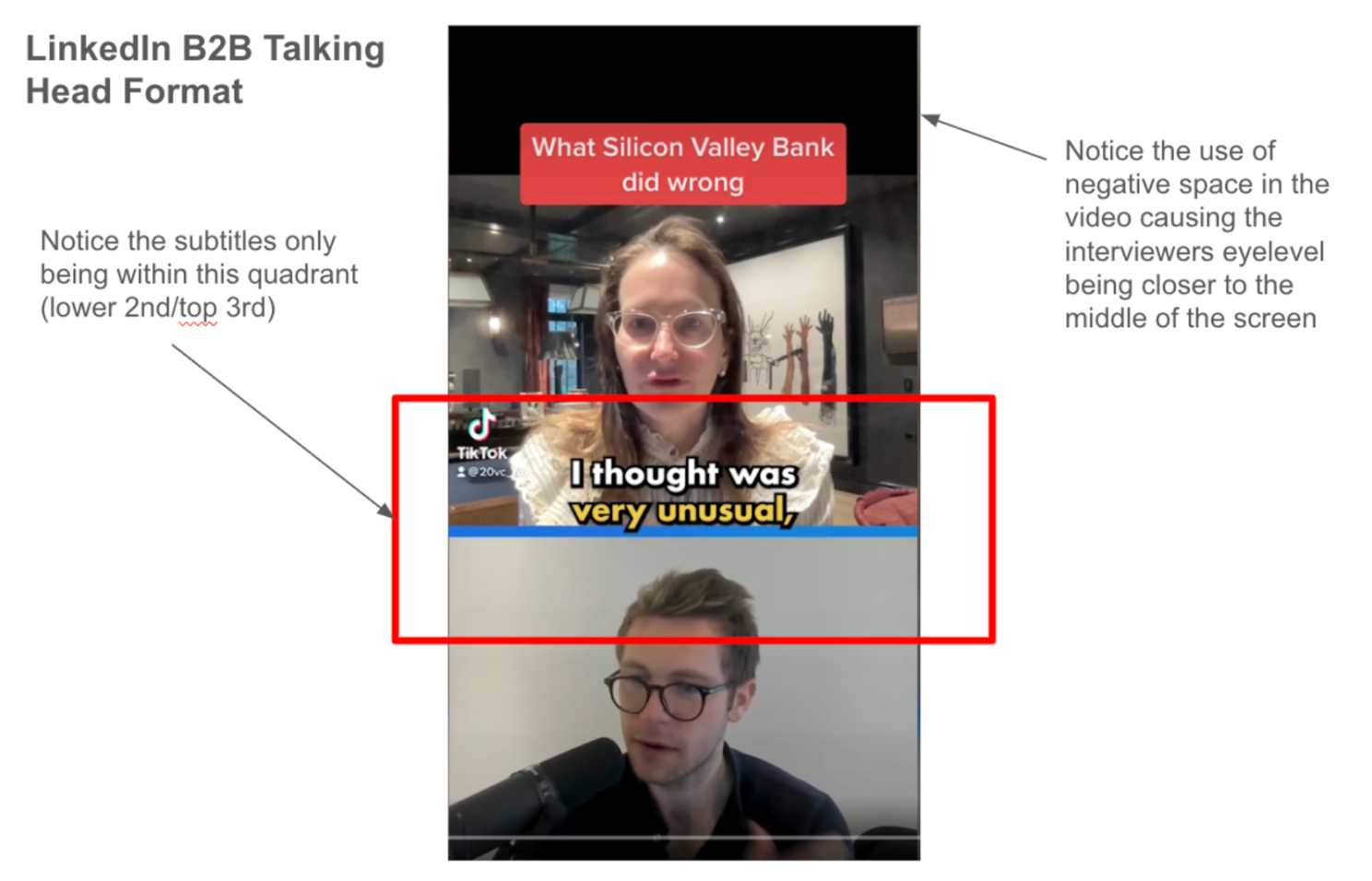
Check out the nuances in the negative space, the placement of the subtitles, and the interplay between pacing, rhythm, and music. Every element is deliberately crafted to elevate the final clip into a more impactful educational experience.
You’ll even see a16z, among others, document their journey in building what they call a “New Media” team to help “build the best turnkey media operation in venture: a single place where founders acquire the legitimacy, taste, brand building, expertise, and momentum they need to win the narrative battle online.” Often you hear them talk about this team as the “a24” of a16z.
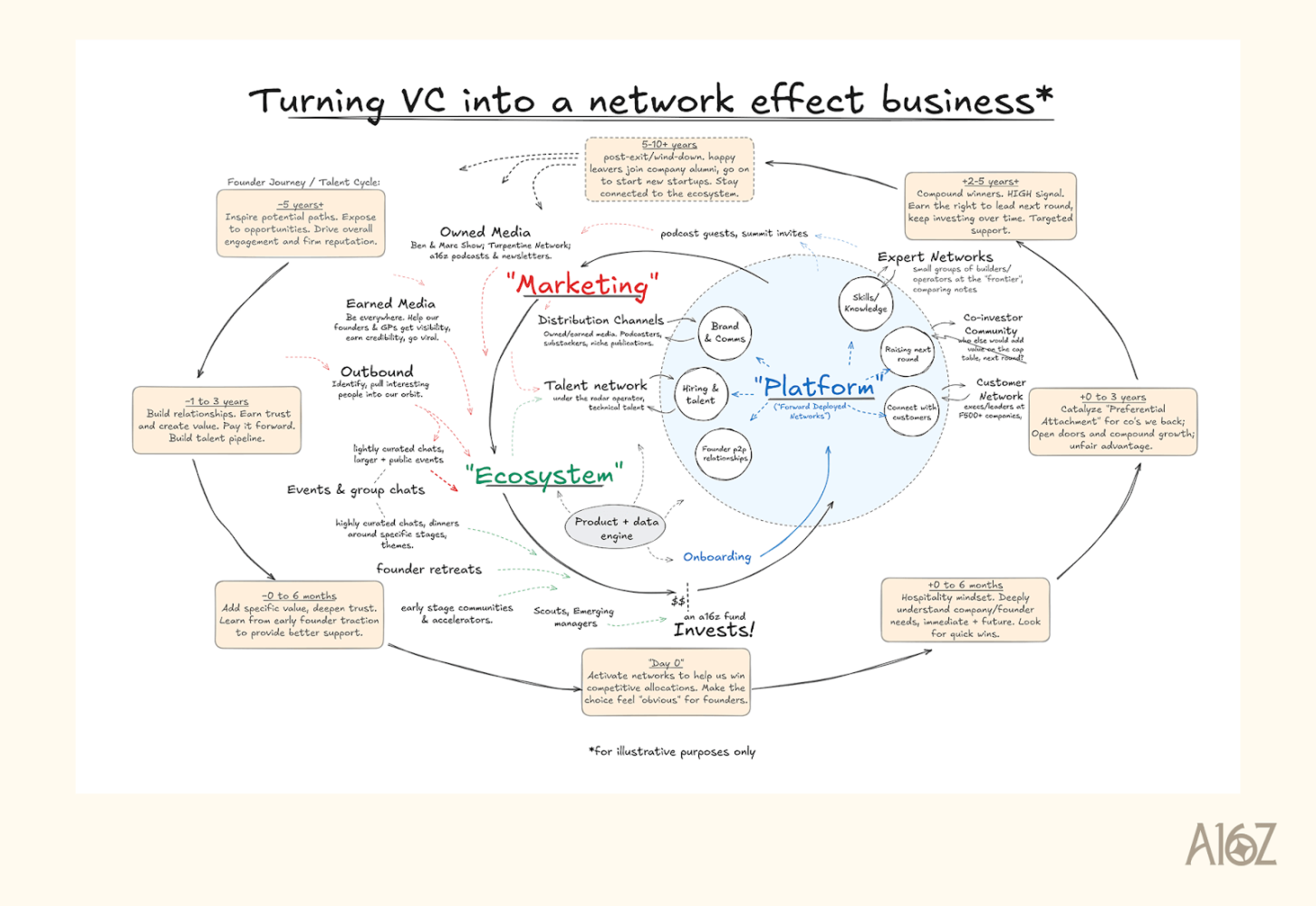
This is long term ecosystem building that will undoubtedly result in a rainforest of opportunity for venture builders.
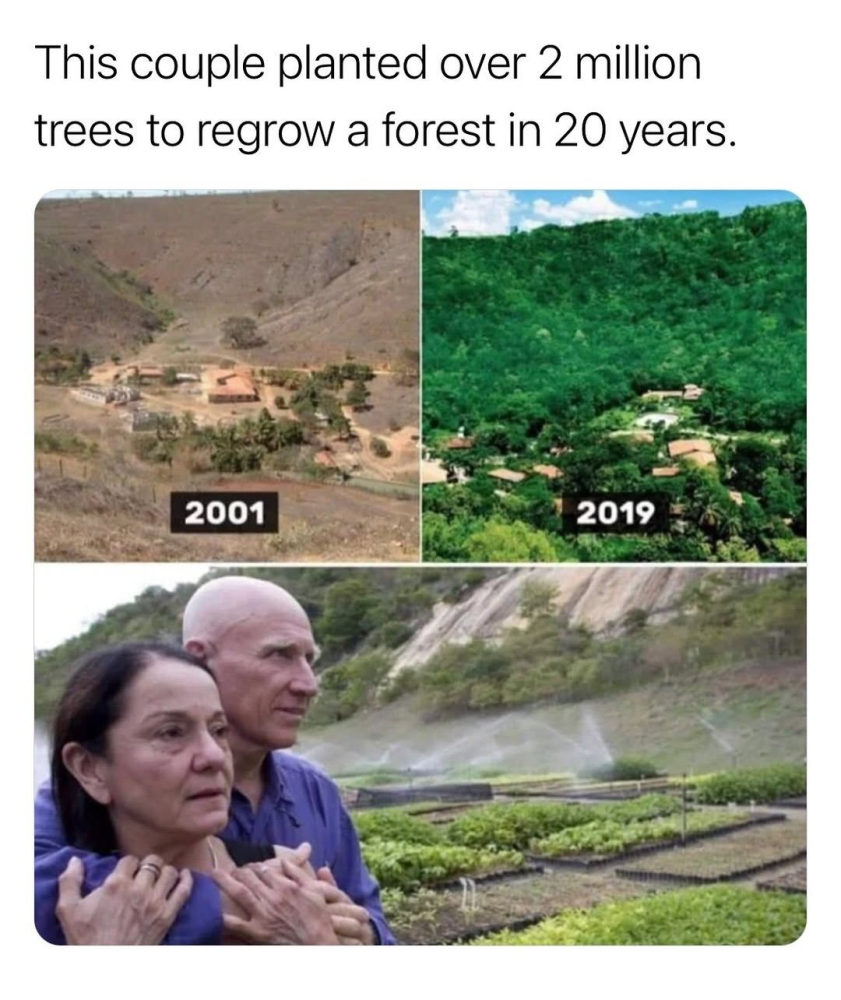
As we stand at this inflection point in B2B, it's clear that AI won't replace the need for us to think long term for the audiences we care about. Without a defined ethos, a sharp market position, and a system built on insights, AI becomes just another tool adding to the noise. But in the hands of a brand with clarity and a clear mission to build an ecosystem through attention and community, AI can accelerate what matters.
This next chapter isn't about choosing between brand/demand or sales/marketing initiatives, it's about waking up to the fact that your buyers don't care about your funnel. They're self-educating in dark social, listening to who they trust, and ignoring your gated pdf. The strongest brands don’t chase trust, they walk in with it. That’s the moat: sharp signal, deep reach, and relevance so obvious the buyer already knows why you’re in the room.
The only question in my mind is which industry in B2B will be next in this new age of creating a long tail demand effect.
This marks the last post in my LinkedIn newsletter series. If you’ve found value here and want to stay tapped in, subscribe to get future drops straight to your inbox.
2026 is shaping up to be a content rich year, and I’ll be sharing my thinking as it unfolds.